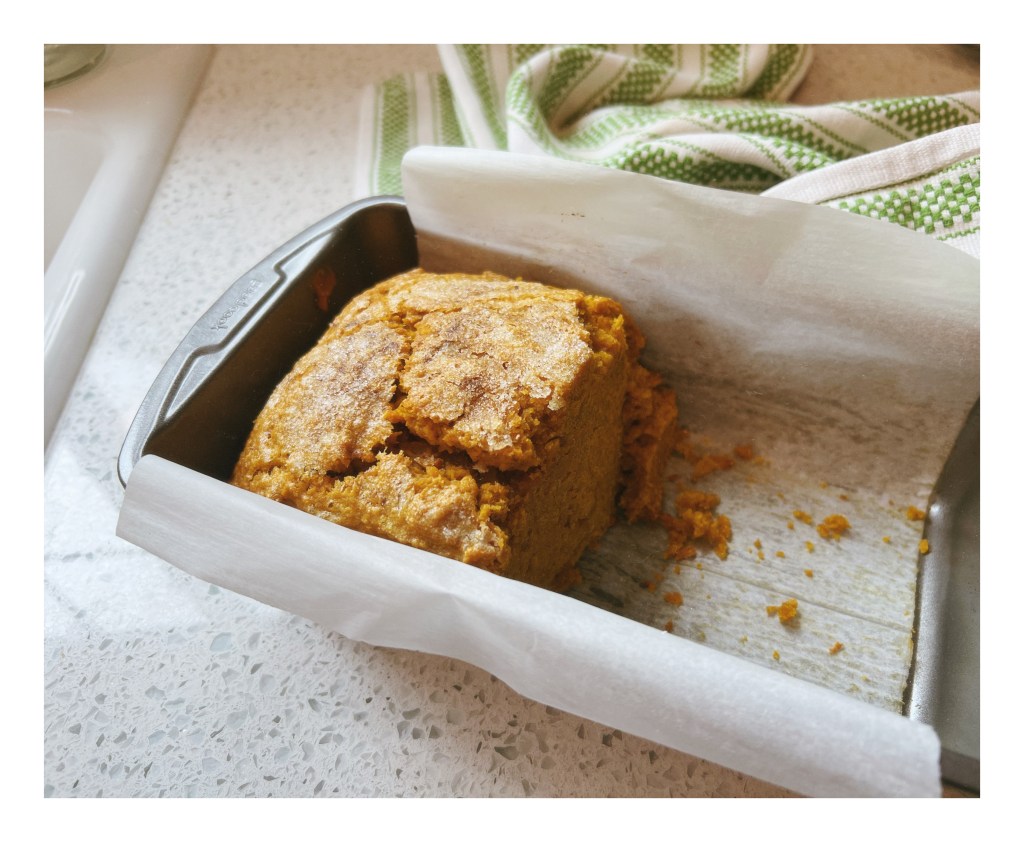
Pumpkin Bread

  • 2 1/2 cups flour
  • 1 tablespoon cinnamon
  • 1 tsp ground nutmeg
  • 1/2 tsp ground cloves
  • 2 tsp salt
  • 1 tsp baking powder
  • 1/2 tsp baking soda
  • 2 tablespoons finely grated fresh ginger
  • 15oz can of Libby’s Pumpkin Purée
  • 1 1/2 cups sugar
  • 1/2 cup olive oil
  • 1/2 cup canola oil
  • 2 large eggs

Directions

  1. Preheat oven to 325°. Coat a 9×5″ loaf pan with canola oil. Line the pan with parchment, leaving a generous overhang in order to be able to lift out the bread easily.
  2. Stir together all the dry ingredients.
  3. Mix together the eggs, pumpkin purée, oils and grated ginger. Then combine the wet and dry ingredients together in one bowl.
  4. Transfer batter to the pan and then sprinkle the top with sugar.
  5. Bake bread for 80–90 minutes.

This recipe is inspired by (but not exactly like) the one demonstrated by Molly Baz, which you can find here.

Fair warning: this recipe will ruin Starbucks’ pumpkin loaf for you forever. There’s no going back when you realize how cheap and easy it is to make at home- and tastier too!

Cream Cheese Frosting

In honor of turning 34, I’m sharing my favorite frosting recipe. It’s excellent on cinnamon rolls, carrot cake, red velvet cupcakes, sliced fruit, hummingbird cake… or right off the spoon.

Cream Cheese Frosting

  • 8oz Philadelphia Cream Cheese, never fat free (you might as well eat salad)
  • 1 stick Salted Butter
  • 1/3 cup Greek Yogurt
  • Splash of Vanilla Extract (and/or Rum)
  • 1 1/4 cup Powdered Sugar
  • Sprinkle of Cardamom
  • Use a mixer on high speed to combine the wet ingredients above and beat well, then add the powdered sugar last and beat again- just when you think you’re done, beat it for another 2 minutes, then chill well.

Pop Quiz— Do you know the difference between frosting and icing? Frosting is thick and spreadable and made with a fatty base, often butter. Icing is thinner and usually made of powdered sugar mixed with a liquid such as water or milk.

Pesach 2022

Somehow, and I do know exactly how, I didn’t end up with hardly any photos of our Seder(s) for 2022. Largely because I was too busy soaking it in. By it, I mean a Seder- not virtual, not cancelled– just an in-person, sharing food and wine, reading the Haggadah together, Seder.

Our family Seder was slightly delayed this year due to Covid. I don’t mean Covid in the abstract sense, I mean Scott and I were isolated for being Covid positive on the original date… so it ended up a little later and smaller than planned, but that’s ok. There was no way we were going to cancel altogether, not after the last 2 years.

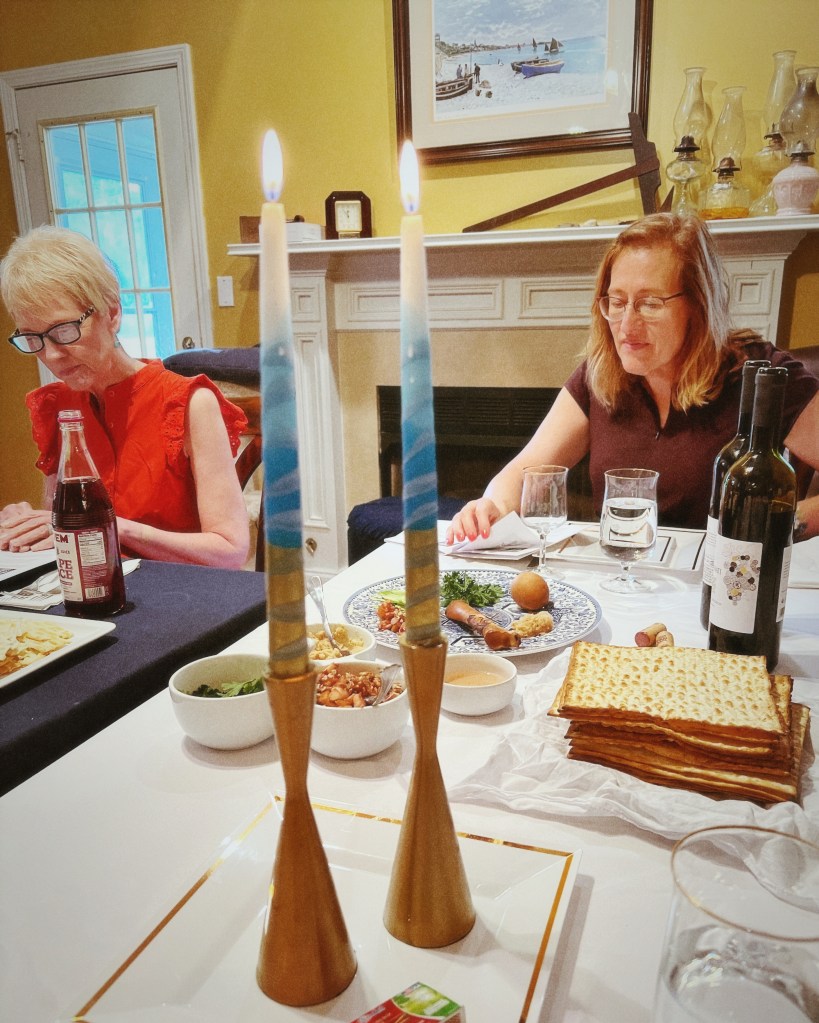
One photo I did nab was this snapshot of the candles Mom bought in Safat especially for Passover. If you don’t know, safat candles are a *thing* and these were not only gorgeous, they literally did not drip. Contrast with the regular ol’ Shabbat candles I usually get from Kroger (which I used for my Aunt Cheryl’s Seder) which drip allllll over my candlesticks every time and inevitably lead to me standing over the sink with ice cubes and a butter knife trying to scrape the dried wax off the sticks, and, because I forgot to put down a plate or tin foil… the tablecloth.

Continue reading

Altoid Tin Watercolors

Watercolor was never my favorite paint. When I was young I fell in love with the slow blending work of oil, but turpentine and work space limitations being what they are, I later transitioned to the beautiful imperfection of acrylics – usually with an element of mixed medium (metal foil, glue, papers, etc).

My Grandmother, however, prefers watercolors as her first choice. I once took a water color class with her as a child and I remember disliking the opaque nature of the paint (and ultimately, painting a grey cat far too thickly so it looked terribly muddy).

March 2, 2022

But now, time is of the essence. And quickly adding a bit of art to my day- in ten minutes, or even 5- is a highly desirable concept. Enter: the homemade Altoid tin watercolor studio.

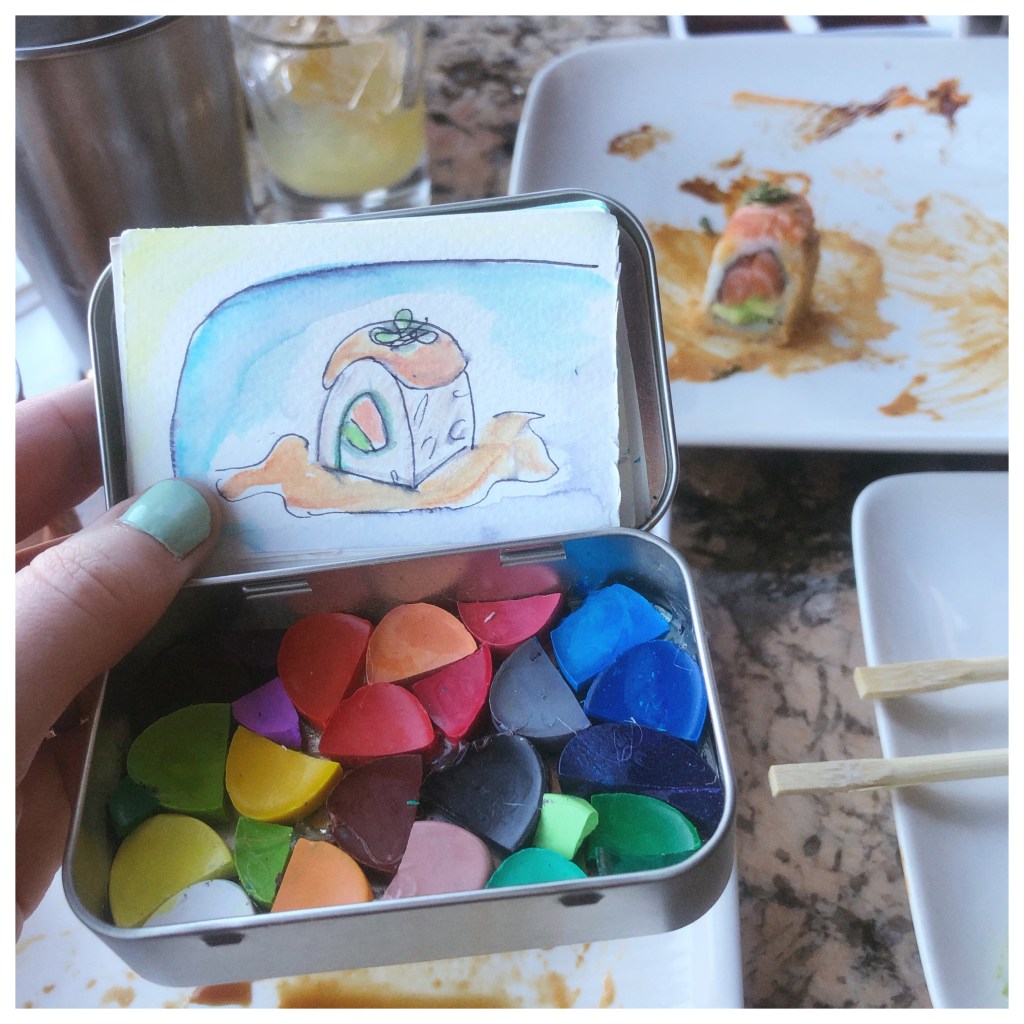
My first painting “out and about” while getting sushi for lunch.

How to make a pocket-size watercolor studio: Buy an Altoids tin, a $1-2 watercolor palette and some cheap brushes. Glue the paints into the bottom of the tin, trim down the paintbrushes to also fit (I suggest using garden shears!), and cut watercolor paper into small rectangles. Voila! An art studio in your pocket.