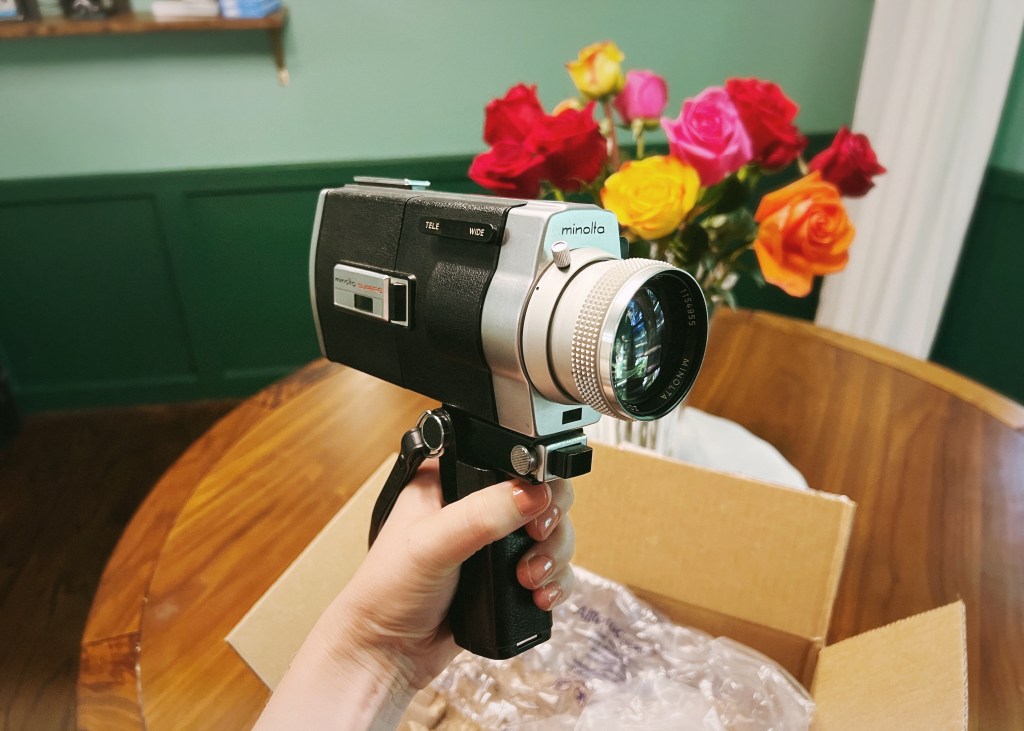
I first spotted my Minolta Autopak while perusing GoodwillFinds.com (now sadly defunct).
I was especially tempted by the promise of a Rokkor lens, the same type as my beloved Minolta XG-1.
Rokkor glass was made by Minolta in the 1970s, an impressive distinction when compared to other camera manufacturers who used pre-made glasses. The glass element was called “Rokkor”, in reference to Mt. Rokko, a mountain in Japan visible from the Minolta factory. The vintage Rokkor lenses have become a fan favorite among photographers for their sharp focus and soft bokeh. It’s hard to define the exact reason, but these lenses have a distinctive glass feel that I just adore.
She was on sale for $40. When I called my husband to get his weigh-in, his response was: “What’s $40? Get it.”
He did not yet know that the cartridges to actually make the camera run would run $39.95… but this is the same story with most of our vintage cameras. It’s not the cost of the camera that will get ya, it’s the film.
I recently got a smalldevice to pull several old VHS tapes to digital. You simply plug the cord into the back of the VCR, and then hook the other end into your laptop, press play and record.
Things I’ve learned in this process:
– VCRs are no longer being made. The last one was produced in 2016.
– My particular GE VCR will ask if you’d like the menu in “English, Spanish, or French” every time you turn it on. I don’t really think it needs to speak any language, but the VCR is desperate to know your preference and won’t play anything until you answer. If you have a remote, you select 1, 2 or 3. If you have no remote, like me, simply insert a commercial VHS. The professionally produced VHS tapes are set to play automatically and will bypass this screen. A home video VHS is NOT set to play automatically and can’t bypass it. I used the live action Jungle Book (each time I turned the VCR on again I’d hear: “It’s Shere Kahn!”).
– How to take a VHS cassette apart and reattach the tape if it’s come off the spool. Also that VHS cassettes are held together by 5 small screws and repairing them is very satisfying!
Maybe it’s just nostalgia, but I think there is something very charming about the quality of VHS tapes with their jumpy transitions, occasional wavy stripes and split color glitches. There’s also something to be said for the effortless editing, simply turn it off and back on again.
The video above captures beloved grandparents, much-loved cousins, and 2 spaces (that backyard and my Mama Johnnie’s living room) which were the context for so many of my establishing experiences. What is a birthday like? What does ‘Christmas with family’ mean? What do you eat at Thanksgiving? I learned much of this and more rambling freely between that green backyard and the front room.
I think one of my favorite parts of the video is my father’s voice in the very last seconds of the video as he zooms in on me and whispers “Happy Birthday” in a gentle tone and voice that I know so well. I couldn’t hear him at the time and wasn’t paying any attention, but it’s so nice to hear it now.
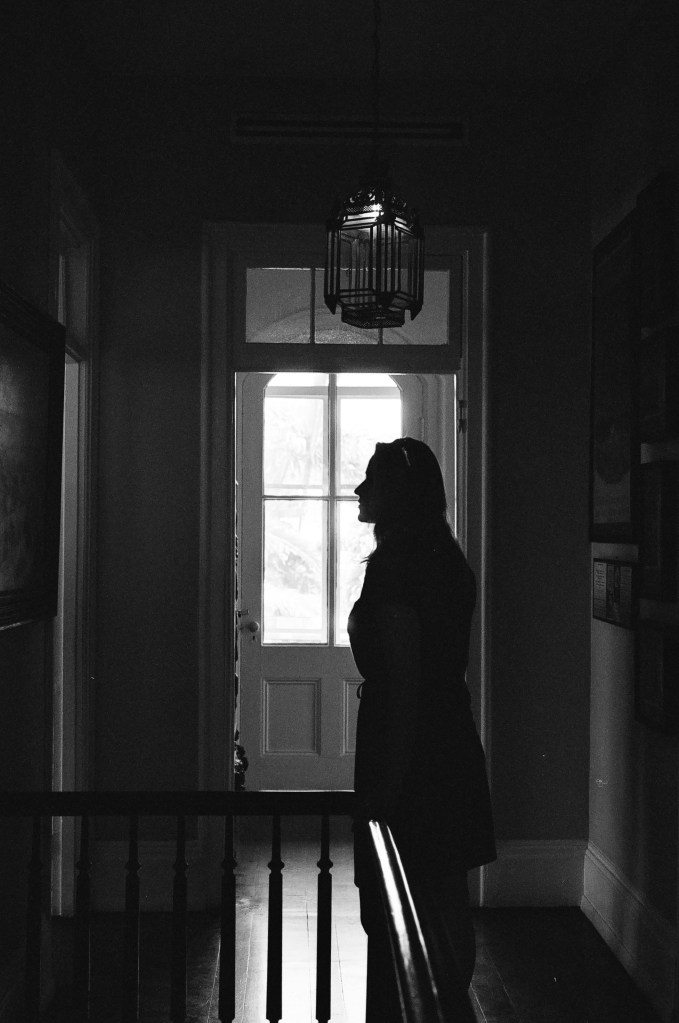
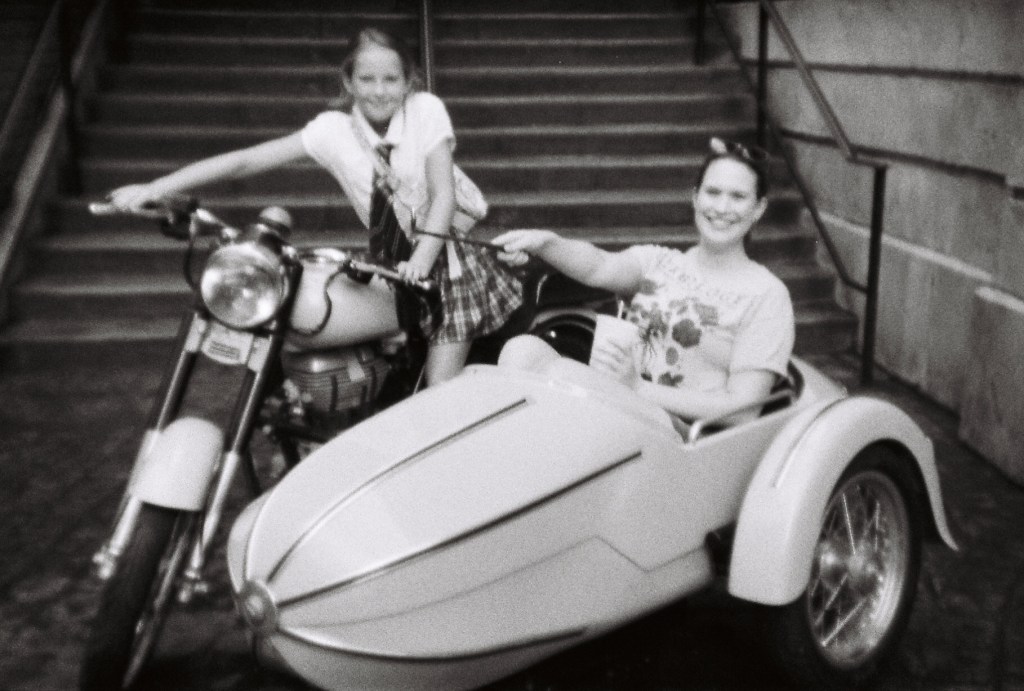
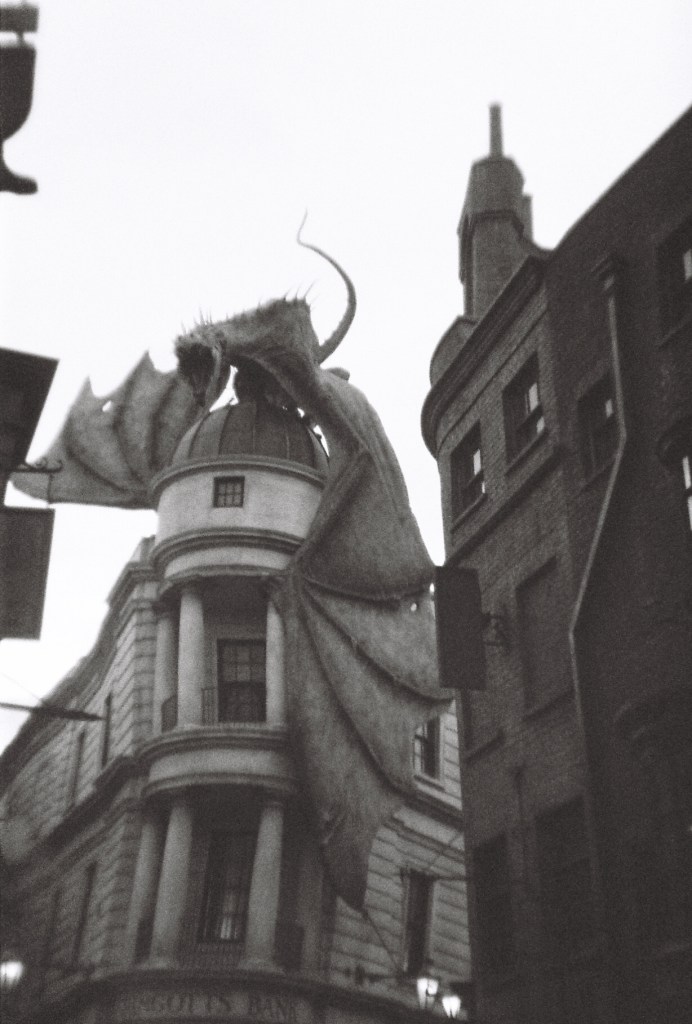
What is a Holga? The name comes from a Cantonese phrase, “ho gwong,” which means “very bright.” It is a plastic camera from the early 80s that takes far from perfect pictures — the appeal is the artistic nature of the unpredictable photos and the lightweight “toy” feel of the camera. It was designed to be a cheap camera for non-professionals (tourists, mostly). Images commonly display vignetting, blur, light leaks, and other distortions. Some argue that Holga cameras influenced the style development of Instagram because looks such as altered colors and light leaks were hallmarks of a Holga photo. The original camera also utilized the square photo format on 120 film (which might have helped to inspire the Insta square), although mine is a little army-green Holga 135 that uses 35mm and shoots rectangular images.
This style of photography is sometimes referred to as “lomography” [an experimental form of photography using film and old-fashioned, analogue cameras]. A Holga is not the camera you want to use when it’s very important to you that your shot come out a particular way, but if you’re looking for something fun and unpredictable that captures images in a unique and artsy way, you’d probably love a Holga.






 Unbidden Grace